

AEO stands for Answer Engine Optimisation. An AEO agency strategy is the plan an agency uses to make a client’s content, entities, and trust signals easy for AI systems to select, quote, and summarise accurately.
What does “AEO” actually mean in 2026?
An AEO strategy agency focuses on Answer Engine Optimisation (AEO), the practice of optimising for answer-first search experiences, where systems generate a response from multiple sources rather than sending a user to a single page. In 2026, that includes AI Overviews, conversational search, digital assistants, and on-site chat experiences.
It is not a replacement for SEO. Instead, an AEO strategy agency treats it as a layer on top of SEO, concentrating on being cited, referenced, and selected within generated answers—particularly for high-intent, question-led queries.
Why are agencies talking about AEO now?
They are talking about AEO because user behaviour has changed faster than most marketing teams have adapted. People increasingly expect instant answers, and they often stop at the first response.
That affects traffic patterns, attribution, and conversion paths. Agencies that can influence “answer share” can protect demand generation when clicks decline and can still drive qualified traffic when it matters.
How is AEO different from traditional SEO?
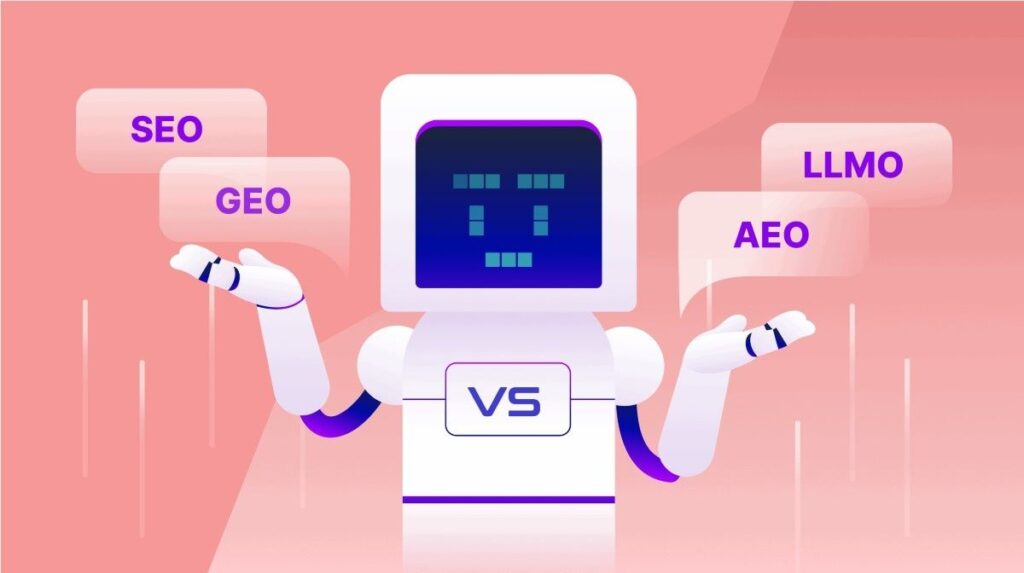
AEO targets inclusion in a generated answer, not just a high ranking. That changes what gets prioritised: clarity, structure, corroboration, and entity consistency become as important as keywords and backlinks.
Traditional SEO often optimises pages to win clicks. AEO often optimises sections to be extractable, quotable, and correct in context so systems can safely reuse them without rewriting them into something inaccurate.
What does an AEO agency strategy usually include?
AEO strategy usually combines technical foundations, content restructuring, and authority building around specific topics. The goal is to make it easy for answer engines to understand who the brand is, what they offer, and when they should be referenced.
Most strategies include: entity and knowledge graph alignment, content designed around question clusters, schema markup, source-worthy assets (original data, definitions, comparisons), and monitoring of how often the brand appears in AI answers.
Which signals make a brand “answer-worthy”?
Answer engines tend to favour sources that are consistent, specific, and easy to verify. They also prefer content that is written to directly answer questions with minimal ambiguity.
Common “answer-worthy” signals include: strong topical focus, clear authorship and accountability, evidence and citations, updated pages, accurate structured data, and a brand footprint that matches across the web, such as business listings, expert bios, and reputable mentions.
What role does entity SEO play in AEO?
Entity SEO is the backbone of AEO because answer engines rely heavily on entities: people, brands, products, locations, and concepts. When an agency aligns entities, they reduce confusion about what a brand is and what it is known for.
That means consistent naming, clear relationships between offerings and problems solved, and supporting signals across pages. It also means treating internal links, navigation, and taxonomy as a way to teach systems how topics connect.
Other Resources : What is SEO and why does it matter?
How should content be written for answer engines?
Content should answer the query immediately, then expand with details that support the answer. In practice, that means short lead paragraphs, explicit definitions, and sections that can stand alone without requiring the reader to scroll for the point.
Agencies often use question clusters: one core topic supported by multiple sub-questions. They also use comparison tables, step-by-step processes, pros and cons, and “when to choose X vs Y” sections because those formats translate well into generated answers.
What technical work matters most for AEO?
The most important technical work is whatever removes friction for crawling, understanding, and extracting. If pages are slow, blocked, duplicated, or structurally messy, answer engines struggle to trust and reuse them.
Agencies typically prioritise: clean indexation, canonical discipline, fast mobile performance, logical heading structure, strong internal linking, and schema. FAQ, HowTo, Article, Organisation, Product, and Review schema often support AEO when they are accurate and not spammed.
How do agencies measure AEO success if clicks drop?
They measure visibility inside answer experiences, not just sessions. That often means tracking brand mentions, citations, link inclusions, and share of answers across priority questions.
Good reporting also connects AEO to downstream outcomes. For example, they may track assisted conversions, branded search lift, demo requests influenced by AI discovery, and changes in lead quality. The point is to prove impact even when the journey is less click-heavy.
What does a practical AEO roadmap look like for 2026?
A typical roadmap starts with prioritisation, not publishing. Agencies usually begin by mapping high-intent questions to revenue, then auditing whether the site answers them clearly and credibly.
Next comes restructuring and upgrading existing content, adding schema, improving internal linking, and building a small set of “anchor assets” such as definitive guides, original research, and comparison pages. Only then do they scale content production around clusters and monitor answer presence.
Why does AEO matter specifically in 2026?
It matters in 2026 because the competition is shifting from ranking pages to winning mindshare inside generated responses. If a brand is not present when prospects ask questions, they may never make it into the consideration set.
AEO is also a risk management play. Without it, a brand’s information can be misrepresented by summaries pulled from outdated or low-quality pages. A strong AEO strategy increases the odds that answer engines quote the right source and reflect the brand accurately. You may like to visit https://therandomman.com/umbraco-development-vs-wordpress-which-platform-wins-for-complex-projects/ Umbraco Development vs WordPress: Which Platform Wins for Complex Projects?
How can they choose the right AEO agency?
They should look for an agency that can explain their method in plain language and tie it to business outcomes. The best agencies do not promise “position one” in an AI answer, because that is not how these systems work.
Instead, they should ask for: a clear audit framework, examples of content that won citations, an entity and schema approach, a measurement plan for answer visibility, and a realistic timeline. They should also expect collaboration, because subject matter expertise is often the difference between generic content and citable content.
What should they do next if they want to start?
They should start by identifying the 20 to 50 questions that most influence revenue, then check what answer engines currently show. That gap analysis often reveals whether the brand is absent, misquoted, or present but weak.
From there, they can prioritise upgrades to the pages most likely to be used as sources, improve clarity and structure, and build supporting authority. In 2026, the brands that win are the ones that make it easy to be understood and safe to cite.
FAQs (Frequently Asked Questions)
What is Answer Engine Optimisation (AEO) in 2026?
Answer Engine Optimisation (AEO) in 2026 refers to the practice of optimising content for answer-first search experiences, where AI systems generate responses by synthesising information from multiple sources instead of directing users to individual pages. It focuses on making a brand’s content, entities, and trust signals easily selectable and quotable by AI across conversational search, voice assistants, chat interfaces, and AI overviews.
How does AEO differ from traditional SEO strategies?
Unlike traditional SEO, which aims primarily to achieve high rankings and drive clicks through keyword optimisation and backlinks, AEO targets inclusion in AI-generated answers. This requires prioritising clarity, structured content, corroborated information, and consistent entity representation so that AI systems can safely extract and accurately quote content sections without misinterpretation.
Why are agencies emphasising AEO strategies now?
Agencies focus on AEO because user behaviour has rapidly shifted towards expecting instant answers from AI-powered search experiences rather than clicking through multiple links. This change affects traffic patterns and conversion paths. Agencies that optimise for ‘answer share’ can maintain demand generation despite declining clicks and continue driving qualified traffic effectively.
What key components are included in an effective AEO agency strategy?
An effective AEO strategy combines technical foundations like clean indexation and schema markup with content restructuring around question clusters. It involves entity and knowledge graph alignment, creation of source-worthy assets such as original data or comparisons, clear authorship signals, and ongoing monitoring of brand presence within AI-generated answers to ensure the brand is accurately referenced.
Which signals make a brand ‘answer-worthy’ for AI search engines?
Brands considered ‘answer-worthy’ typically exhibit consistent topical focus, clear authorship and accountability, evidence-backed content with citations, regularly updated pages, accurate structured data (schema), and a coherent brand footprint across the web including business listings and expert bios. These factors help AI systems verify credibility and choose the brand’s content for generated answers.
How should content be structured to perform well in answer engine optimisation?
Content should immediately address the query with concise lead paragraphs followed by detailed supporting information. Using question clusters with core topics supported by related sub-questions works well. Formats like comparison tables, step-by-step guides, pros and cons lists, and decision-making sections (‘when to choose X vs Y’) enhance extractability and suitability for AI-generated answers.
About the Author